

Screen Printing vs. Embroidery: Which Is Best for Your Company Uniforms?
The best decoration method for company uniforms depends on how the apparel will be used, not on one method being better for every business. Screen printing is often a strong choice for bold artwork on shirts, hoodies, and other flat apparel. Embroidery creates a textured, polished finish that works especially well on polos, jackets, hats, and uniforms. Your logo, garment, work environment, order size, and desired appearance should all guide the decision.
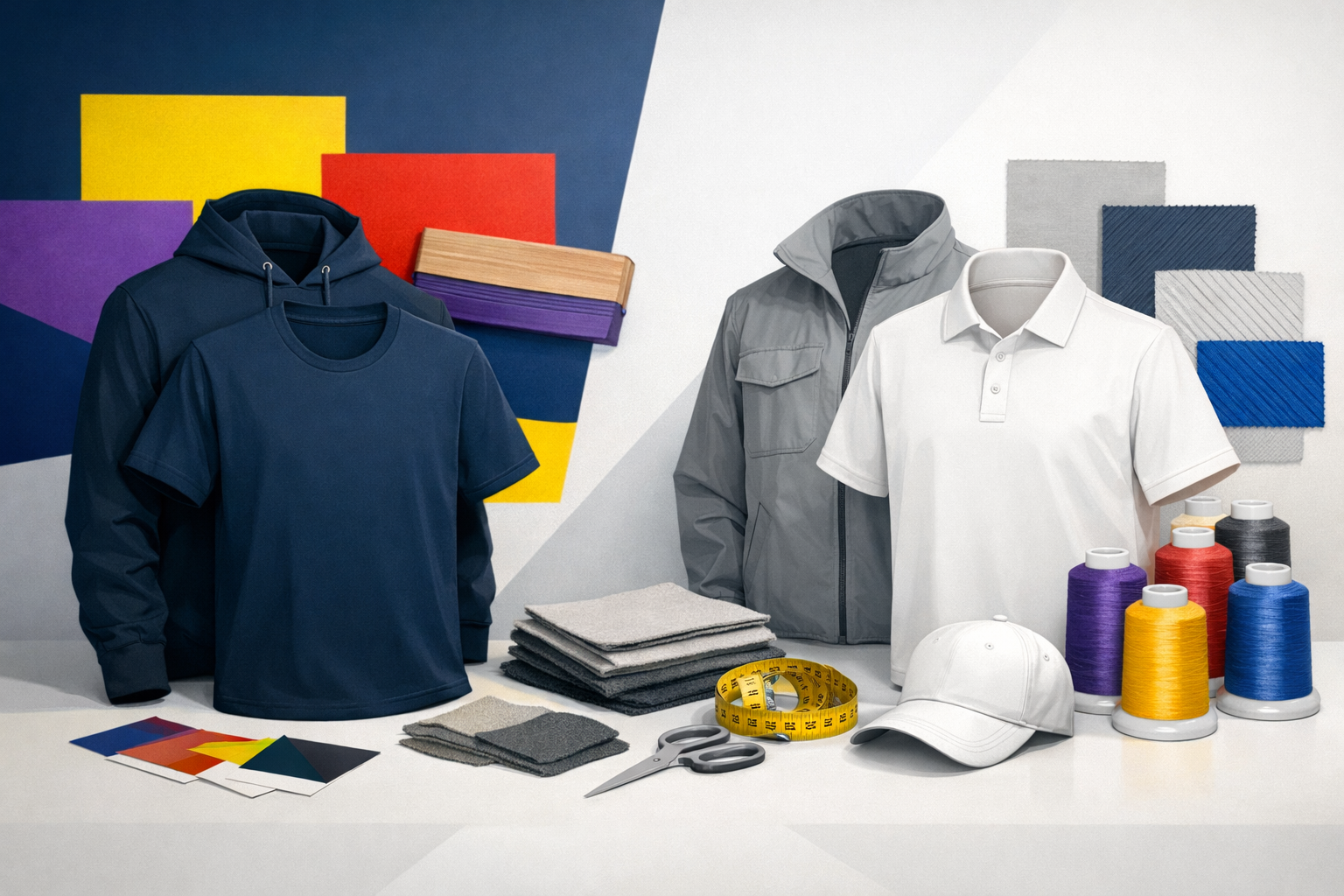
A useful way to choose is to start with the job each uniform must do. Will employees work outdoors, move around frequently, or wear the apparel over several layers? Does the logo include fine detail, a large graphic, or mostly simple lettering? Are you outfitting a small office team or ordering apparel for a larger group? The answers will help you compare the two options before requesting a quote from Infinity Impressions in Tualatin.
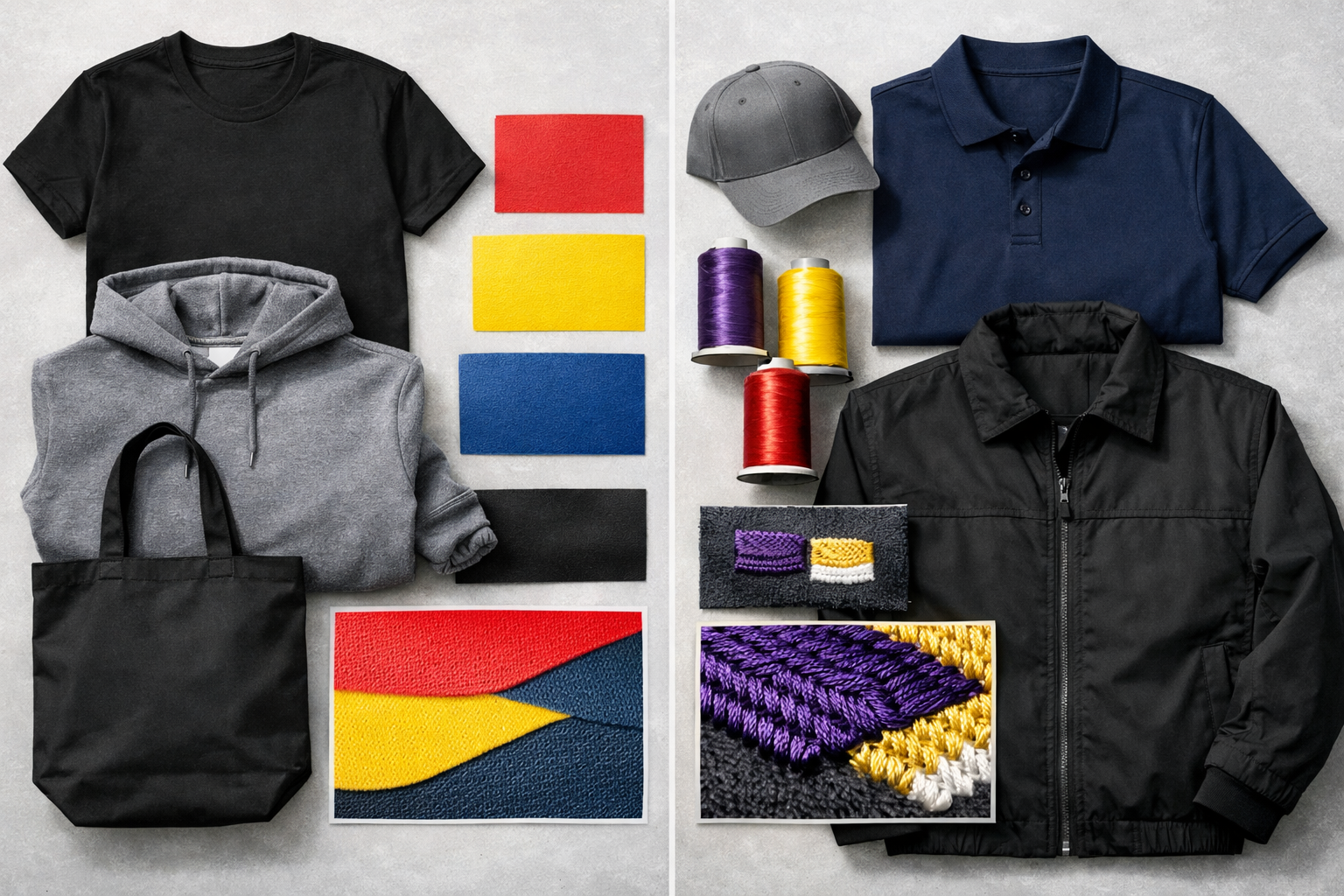
How Screen Printing and Embroidery Differ
Screen printing and embroidery create very different results, even when they use the same logo. Screen printing applies ink to the surface of a garment, producing a flat design that can include strong colors, broad shapes, and large graphics. Embroidery stitches thread into the garment, creating a raised, dimensional appearance. Neither option automatically suits every uniform. The decoration should match the garment’s fabric, the size and complexity of the artwork, and the way employees will wear and wash the item.
Infinity Impressions provides both custom screen printing and custom embroidery for businesses, schools, teams, and organizations. Its screen printing operation includes an 18-color M&R Cobra press, while its embroidery service uses Tajima embroidery machines. Those capabilities can support different uniform plans, but the final recommendation still depends on your specific artwork and apparel choices.
When screen printing makes sense
Screen printing is a practical choice when you want a visible graphic, large back design, or bold front print. It works naturally on T-shirts, sweatshirts, hoodies, tote bags, and similar flat surfaces. A printed design can give a team a more casual, energetic look and can make artwork, event names, or larger branding easy to see from a distance. It may also be a good fit when the same design will be applied across a larger apparel order.
The design itself matters. Screen printing generally suits artwork with clear shapes, strong contrast, and colors that need to stand out. It is not limited to simple one-color logos, but your decorator may need to adjust artwork for the selected garment and printing process. Ask to review a digital mockup before production so you can check placement, size, colors, and how the design will look on the actual apparel.
When embroidery makes sense
Embroidery is often chosen for a more structured or professional uniform appearance. A stitched logo on a polo, jacket, hat, work shirt, or uniform can add texture and visual depth without covering a large area. This makes embroidery a natural option for a small left-chest logo, a cap front, or a jacket application. It can also help different garments look like part of one coordinated uniform program.
Embroidery is not ideal for every type of artwork. Very small lettering, intricate details, gradients, or a large, dense design may need to be simplified before stitching. Thread adds weight and texture, so the garment’s construction and the placement area matter. Ask whether your logo needs digitizing or editing for embroidery and request a proof that shows the approximate size and thread colors before approving the order.
The same logo may need two treatments
You do not always have to choose one method for every uniform item. A company might use embroidered logos on polos and jackets while using screen printing on T-shirts or hoodies. This approach can create a consistent brand system while matching each decoration to the garment. The logo may need slight adjustments between methods, such as simplified lettering for embroidery or a different size for a large printed back design.
A practical uniform plan can also separate daily workwear from event or promotional apparel. For example, a customer-facing employee may wear an embroidered polo, while a team working at a community event may wear a screen-printed T-shirt. The brand can remain consistent through colors, logo placement, and garment selection even when the decoration changes. Treat the two methods as tools in one apparel program rather than competitors where only one can be used.
A Practical Method for Choosing Your Uniform Decoration
Before comparing quotes, write down the conditions your uniforms must handle. List the garments, where the logo will go, how often employees will wear them, how they will be cleaned, and what the artwork must communicate. Then compare screen printing and embroidery against those requirements. This prevents a common mistake: choosing a decoration because it looks attractive on a sample while overlooking whether it fits the garment or the workday.
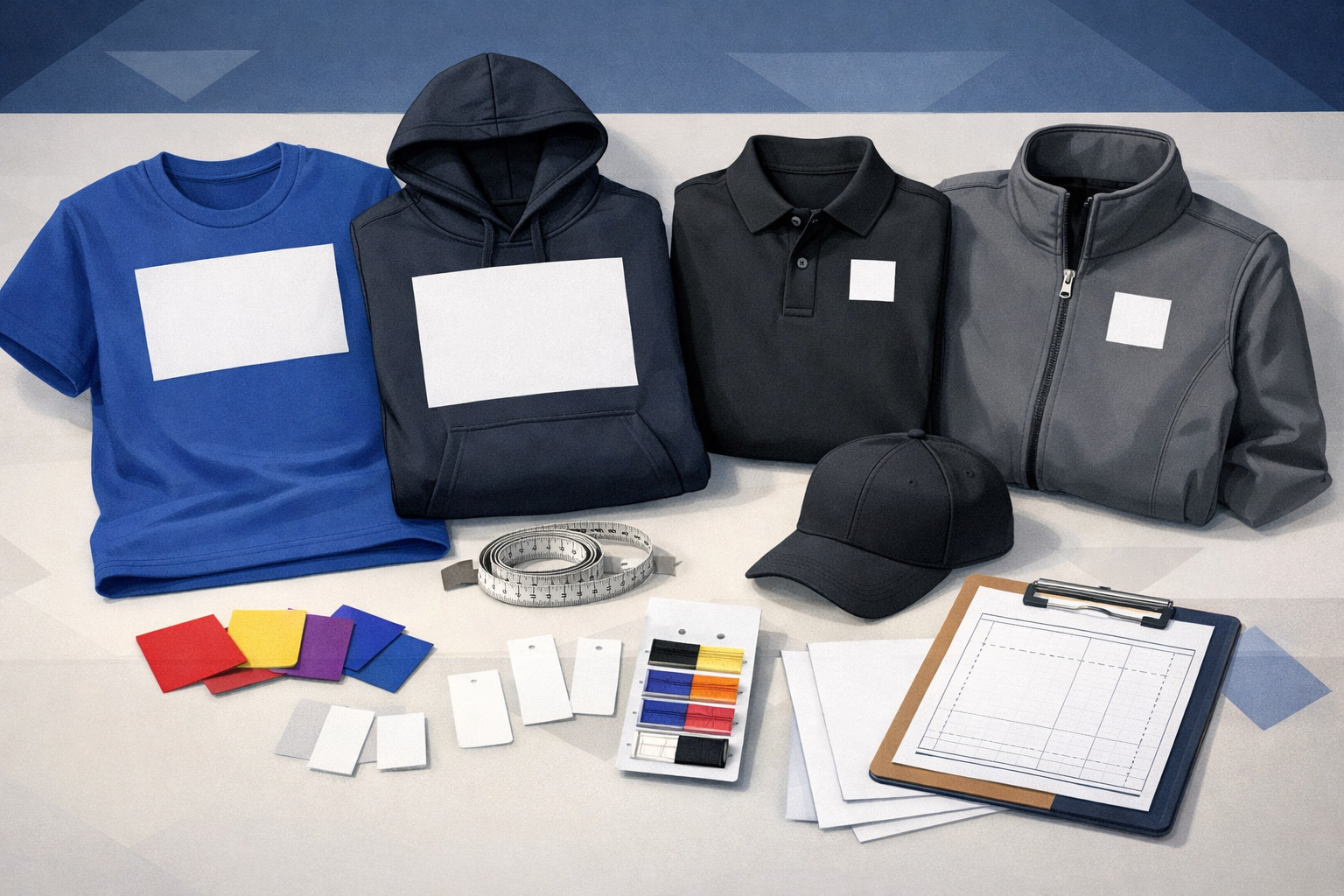
When you contact a decorator, provide the logo file, the garment types, the number of pieces, preferred colors, placement ideas, size ranges, deadline, and intended use. Ask which details may affect production, such as artwork preparation, garment compatibility, decoration area, and approval steps. Infinity Impressions can help businesses discuss custom apparel options, but the most useful recommendation will come from reviewing the actual project details.
Step 1: Match the method to the garment
Start with the apparel, because the same logo can behave differently on different surfaces. T-shirts and hoodies provide broad, flat areas that commonly suit screen printing. Polos, jackets, hats, and work uniforms often provide practical locations for embroidery, such as a chest, sleeve, or front panel. Heavy or layered garments may also affect how decoration feels and where it can be placed.
Think about movement and comfort as well. A large, dense decoration may feel different from a small chest logo. A stitched design can add texture, while a printed design can cover more area without the same raised surface. These are not reasons to reject either method; they are prompts to compare the decoration with the garment and the employee’s daily activity.
Step 2: Evaluate the logo and visual goal
Look at what the logo needs to accomplish. If recognition depends on a large graphic, vivid color blocks, or a message that should be readable across a room, screen printing may offer the visual impact you want. If the goal is a restrained, professional mark on a polo, jacket, cap, or uniform shirt, embroidery may better match that appearance.
Artwork may need preparation for either process. Screen printing can require attention to color separation, sizing, and placement. Embroidery requires a stitch-ready version of the design, and small details may need to be simplified. Ask for a proof rather than assuming a digital logo will look identical when printed or stitched. The proof is the right time to catch a line that is too fine, lettering that is too small, or a logo that feels oversized on the garment.
Step 3: Compare quantity, schedule, care, and total value
Quantity can influence the production approach and quoted cost, but you should compare the complete project rather than guessing from a decoration label. Ask what is included in the quote, including garments, artwork preparation, setup, decoration locations, additional sizes or colors, and any delivery requirements. A large order of one design may be handled differently from a small order with several garment types or personalized names.
Also discuss care and expected use. Follow the garment and decorator’s washing instructions, and ask whether the selected apparel and decoration are appropriate for repeated cleaning or demanding work conditions. If the uniforms will be worn outdoors, around equipment, or in jobs that require special garments, tell the vendor before selecting the decoration. A dependable decision balances appearance, comfort, maintenance, lead time, and the complete quoted price.
Hypothetical uniform examples and next steps
Hypothetical example one: a landscaping company wants a small logo on polos, jackets, and caps for employees who meet customers. Embroidery may be a strong starting point because the requested placement is compact and the desired look is structured. The company should still confirm that the logo’s small text can be stitched clearly and that the garments suit the work environment.
Hypothetical example two: a community organization wants colorful T-shirts with a large event graphic on the front and back. Screen printing may be a better starting point because the design needs broad coverage and strong visual impact. The organizer should provide the final artwork, confirm garment colors, approve a proof, and ask how the quoted price changes with the number of print locations.
To make your decision, prepare two or three decoration plans instead of asking only for a single price. For example, request a quote for embroidered polos, screen-printed T-shirts, and a combination of both. Compare the appearance, garment comfort, logo readability, care instructions, schedule, and complete quoted fees. Then request a production proof before approving the order. This process gives your team a clear basis for choosing uniforms that look right and work well in daily use.
Screen Printing and Embroidery Uniform FAQ
Is screen printing or embroidery more professional for company uniforms?
Either can look professional when matched to the garment and brand. Embroidery often suits polos, jackets, hats, and compact chest logos, while screen printing can create a polished result on T-shirts, hoodies, and larger graphic designs. Consider the image you want and how employees will use the apparel.
Can the same company logo be both screen printed and embroidered?
Yes. A logo may be used across both methods, but it may need different sizing or artwork adjustments. Small lettering and fine details may need simplification for embroidery, while screen printing may use a larger layout or more prominent graphic.
Which decoration is best for polos and jackets?
Embroidery is often a natural starting point for polos and jackets because these garments commonly have suitable areas for a compact stitched logo. However, the fabric, logo size, garment construction, and intended use should be reviewed before production.
Should I use one decoration method for every uniform item?
Not necessarily. Many uniform programs combine methods, such as embroidered polos and jackets with screen-printed T-shirts or hoodies. Using one coordinated logo system across different garments can preserve brand consistency while allowing each item to use the decoration that fits it best.
What should I send when requesting a uniform quote?
Provide your logo, garment types, estimated quantity, sizes, preferred colors, decoration locations, deadline, and intended use. Also ask about artwork preparation, proofs, care instructions, garment compatibility, setup or additional decoration fees, and the complete quoted project cost.
